Building government capacity for the AI era
When we started building Horizon in 2022, AI policy was still an esoteric topic, and a full-time career in it was an unusual choice. When we’d explain our work, we were often met with uncertainty and skepticism. Fellowship programs have been around for a long time, but Horizon’s fellowship was the first to focus on placing “AI fellows” in DC, and people often doubted whether offices would even be interested in people focused on something so “niche.” We had a hypothesis that AI would be a big deal, and that DC would soon wake up to that, but it was far from proven.
Times have changed. AI is now widely seen as a critical issue. We don’t get confused looks anymore when people hear we work on AI policy. Instead, they ask us what exactly we do (and don’t do), what areas of AI we focus on, and how our work is helping build government AI capacity. They also want to know how we differ from others now working in the space—including the government itself, through Tech Force and similar initiatives, as well as organizations outside it.
In this essay, we answer these questions. The first part explains the “why”: the premises that motivated us to start Horizon and that still drive our work today. The second part covers the “what”: how we’ve translated those premises into action so far and where that situates us in the government AI capacity ecosystem. And in the third part, we look toward the future.
Part I: Why we do what we do. Our mission is to help the US government be prepared to navigate our era of rapid technological progress, especially in AI. We pursue this mission by building government capacity, specifically through talent pipelines into AI policy and related domains. This focus is based on four fundamental premises, which have motivated our work since our launch:
- AI will transform society
- Government will shape how AI affects society
- Government’s huge AI talent deficit could prevent it from playing a positive role
- The government’s AI talent problems are solvable
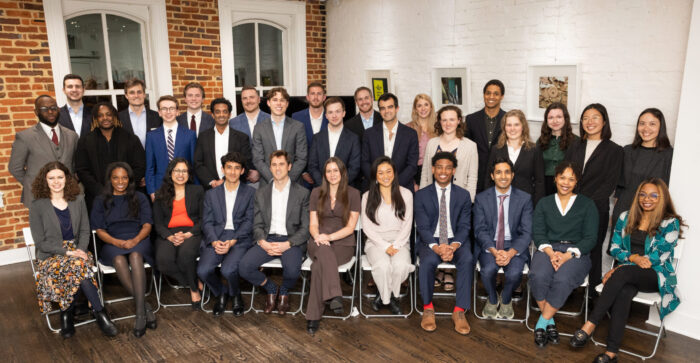
Part II: What this work looks like in practice. In our first four years, we’ve helped hundreds of people pivot into public service. We’ve focused on supporting people doing policy work in both government institutions and nonprofit organizations, and have deliberately built a deeply bipartisan, interdisciplinary, and mission-driven community of AI policy talent. Fellows and others who have gone through our programs have done groundbreaking work across the field, in areas ranging from science and innovation to national security to government modernization.
Part III: What the future holds. With AI progress accelerating, our mission has only become more urgent, and we’re growing our work in multiple ways. Our core focus has been bringing AI experts into the policy world. We’ll be scaling up this work to match the exponential increases in talent demand and supply we’re seeing. We’re also rapidly growing our work supporting the many policy and government leaders who are newly grappling with AI-related questions. And finally, as AI’s prominence continues to increase, we believe there will be opportunities to help government bring much of this staffing and capacity-building work in-house, where it ultimately belongs.
When we launched, the idea that the world urgently needed ambitious projects to help build government AI capacity was a hypothesis. Developments since then have borne it out. American companies lead the world in AI. The US government should too—and with the right talent in place, it can.
Part I. Why we do what we do
AI will transform society
We believe AI will transform society, with many effects already apparent and more profound benefits and risks on the horizon. We don’t know exactly how and when change will happen—there are major open questions about the pace of progress and diffusion, how much that progress will transfer to the physical world, and whether there’s any ceiling on capability and reliability advancements. But across the credible range of answers to these questions, government faces a vast amount of work that it is currently unprepared to do.
Not everyone shares these views. Some believe that AI is fundamentally overhyped and that the current investment cycle will deflate without leaving much behind. If they are right, sustained large-scale investments in government AI capacity would hardly be worth it.
We don’t find this view credible. AlphaFold has predicted the structure of nearly every protein known to science, and earned its creators a Nobel Prize. AI systems can now execute end-to-end autonomous hacks of high-tech companies, and are transforming work across coding, drug discovery, weather forecasting, health care, scientific research, and countless other domains. In the early 2020s, the transformative potential of AI was a hypothesis that could reasonably be disputed. But today, whether AI will have far-reaching implications at all is no longer in doubt.
That still leaves a wide range of scenarios on the table. Some argue that AI is transformative but not unprecedented. One example is the AI as Normal Technology school of thought, which treats AI as a general-purpose technology in the lineage of electricity—powerful and consequential, but diffusing through society gradually, at the speed of institutions rather than the speed of model releases. Others see AI as fundamentally different. The AI 2027 perspective, for example, predicts radical transformation within years rather than decades, with AI systems soon performing virtually all the work of improving future AI systems. At that point, “recursive self-improvement” in AI models could unlock tremendous and rapid jumps in capabilities.
These two schools disagree on many things, and they are often pitted against each other in AI debates. But when the authors of AI as Normal Technology and AI 2027 outlined their common ground, they agreed that “AI will be (at least) as big a deal as the internet” and “governments must build [AI] capacity.”
We agree. We’re uncertain about exactly what AI progress will look like. But we are confident enough in its transformative potential that building government AI capacity, both to harness AI’s benefits and to address its risks, feels like a critical and urgent priority.
Government will shape how AI affects society
The US government helped create the field of AI. It will also play a large role in shaping AI’s impacts on society—how fast they arrive, how the industry will be structured, which domains will see real-world effects first, and ultimately, whether and how the technology benefits the American public.
Government is already acting on both the upside and the risks of AI, and we should expect to see more action as AI’s transformative potential becomes clearer. The success of AlphaFold (which itself was built on government-sponsored datasets) inspired the Trump administration to launch the Genesis Mission, which aims to use AI to radically accelerate scientific progress. Government adoption of AI has also sped up, with more than 3,000 use cases in development at the federal level alone. The FDA, to take just one regulatory agency, has cleared roughly 1,500 AI-enabled health care applications. As AI models’ cyber capabilities have increased, policymakers have responded with export bans, security vetting of frontier models, and the launch of a new White House task force.
Much of what government could do on AI is not controversial. Most agree that government should have the in-house analytic capabilities to measure AI’s progress and its effects, for example on the labor market or national security. Most also agree that government should leverage AI if the technology improves its ability to deliver on core services (though some consider that a big “if”1). And few object to accelerating AI-fueled progress in science and innovation. In these and many other ways, government can help maximize AI’s benefits.
The biggest controversies in AI debates are about regulation—whether to regulate at all (and which existing regulations already apply), what types of AI to focus on (and how to define AI in the first place), what form regulation should take (from ex ante approvals to ex post enforcement), whom rules should apply to (e.g. developers vs. deployers), at what level laws should be made (e.g. federal vs. state), how enforcement could or should work, and much else. Some of these divisions are downstream of people having very different assumptions about AI as a technology, but even people with broadly similar models of AI will disagree strongly about regulatory questions.
Whatever your position in those debates, choices made in government will massively affect AI’s progress and impacts. The idea that government will shape AI in consequential ways—through action or inaction—should no longer be in question. What is in question is whether the government’s role will ultimately be a positive one. And much of that will come down to government capacity.
Government lacks the AI talent it needs
The government’s many goals when it comes to AI—promoting innovation, improving services, safeguarding national security, protecting consumers, and much more—all require talent: people who understand AI well enough to make good decisions about what to build, buy, fund, analyze, or regulate.
Yet, as the National Security Commission on Artificial Intelligence diagnosed back in 2021, “the human talent deficit is the government’s most conspicuous AI deficit.” Despite the efforts of the many talented people currently in government, the same is true today, not only within the executive branch but in Congress and at the state and local levels as well. Even as many public servants add AI to their already demanding portfolios, too few can turn to a colleague who deeply understands the technology.
This should be a concern no matter your perspective on AI policy. People worried about overregulation want staffers who understand the technology well enough to write legal definitions of AI that don’t accidentally sweep in decades-old software or devices like calculators, and robotics rules that actually do what they intend. People who want government to invest in AI for scientific progress want that money targeted at specific bottlenecks that industry won’t resolve by itself. National security experts worry that government lacks the staff to keep pace with quickly advancing capabilities, for example in cyber security, and would be unable to respond effectively to crises.
It’s no surprise, then, that building better AI talent pipelines into government has broad bipartisan support. Both the Biden and Trump administrations emphasized it in their AI executive orders and national security memoranda (as we discuss more in Part III). But so far, those initiatives have not solved the underlying problem—even as rapid progress in AI has greatly increased its urgency.
Talent is only one part of a government capacity agenda.2 But it is a huge one, and it compounds: all other prominent proposals for government capacity improvements, like procurement and oversight reform, depend on having the right people in place to make them happen.
We believe that amid deep uncertainty about AI’s trajectory, building government capacity is among the most critical AI policy priorities: it pays off in basically every future scenario. It is also one of the few things that the different sides of various AI policy debates can agree on.
The government’s AI talent problems are solvable
When people hear about our work, they often ask us: Would any great AI talent actually want to work in government? Is progress on this even feasible?
The barriers people cite are many: Government pay is too low and is capped by law. Standard hiring processes are too slow and cumbersome. There isn’t enough AI talent, and the best people will want to work in the private sector. Government hiring managers don’t know who to look for. Security clearance timelines are glacial, and many AI experts are ineligible. Even if you manage to bring people in, they will not have enough support or resources to do their best work, and they’ll soon leave again. And so forth.
Fatalistic assumptions about the talent and capacity problem have consequences: they make policymakers and the public feel they have no reasonable options. If we assume the government cannot build enough capacity, nuanced policy ideas will feel impossible to execute—which then leaves decision-makers with a false choice between doing nothing and adopting broad-brush policies that will likely miss their mark or fail in implementation.
But a lack of capacity is ultimately a result of inaction, rather than an inevitable feature of the world. Capacity can be built. The barriers to attracting, retaining, and utilizing talent in government are real—but they are not insurmountable. As we have seen in our work, thousands of people want to serve if they can advance the national and public interest, even at significantly lower pay. And bureaucratic obstacles can be broken down with effort. (We’ll turn to the “how” of this in Part III.)
Government capacity is a policy choice. Through a combination of work by government itself and a supportive ecosystem of outside organizations like Horizon and many others, progress is possible.
Part II. What it looks like to build AI policy talent pipelines
In our first few years, Horizon’s key accomplishments have included:
- Placing more than 110 fellows across federal agencies, congressional offices, and think tanks, with more than 90% of program alumni staying in the policy field3
- Building a truly bipartisan fellowship community, with congressional placements 60% Republican and 40% Democratic, and program alumni who served as political appointees in both the Biden and Trump administrations
- Working one-on-one with more than 1,000 individuals looking to break into DC and dozens of hiring managers looking for talent, leading to many dozens of hires
- Organizing in-person workshops for 300+ people exploring policy careers, many of whom subsequently transitioned into the field
- Creating online resources that have helped 250,000+ readers explore their career options, learn about emerging tech policy and government, and get jobs
In doing this work, we’ve made some important choices about which types of talent and policy institutions we prioritize helping. In this second part of the essay, we describe those choices and provide examples of the work we’ve supported. (Part III describes some of our programs, and future plans, in more detail.)
Where we’ve chosen to focus
Supporting policy-focused talent, both in and outside government
The federal government is enormous, with a workforce of millions across multiple branches and hundreds of agencies and offices, and a large constellation of supporting organizations surrounding it. It has many missions and functions, and its talent needs are correspondingly broad. No single organization can support all (or even most) of them, even when focusing on a specific technology area. So every capacity-building organization has to make choices.
One decision we faced was what type of work to support, and relatedly, what institutions that would encompass. The choices we made here explain, for example, why we run a fellowship program that places talent both inside government (at federal agencies and congressional offices) and outside (at think tanks and other policy nonprofits):
- Focusing on policy work. While we’ve supported talent working on many kinds of AI projects in government, our focus is on supporting talent for policy work. That focus reflects where we saw the biggest gap. A strong civic tech ecosystem existed to help technologists enter public service in technology roles (for example, software engineering positions). A large set of pathways and programs, most recently joined by the Trump administration’s Tech Force, existed to onboard them. But there were far fewer ways for that software engineer to take their expertise and apply it to broader societal questions.4 To support experts in making the jump into policy, we need to select experts with the right fundamental traits, train them in policy skills, and help them navigate toward placements that are a great fit, all in a world and profession that’s unfamiliar to them. These are among the core capabilities we’ve built that make our work impactful.
- Supporting both government institutions and the ecosystem surrounding them. Policy work isn’t done only in government. On the front end, a lot of relevant ideation and research happens at places like think tanks, which help policymakers track AI developments and craft policy proposals. On the back end, a lot of policy implementation is also done outside government, for example in standards bodies or public-private partnerships. A healthy AI policy ecosystem needs a wide range of organizations with deep benches of AI experts who can support the government’s work, many of whom will also rotate into government roles over time. We therefore decided to support not only government hiring managers but also those at think tanks, national labs, and other policy-focused nonprofits. This approach has the added benefit of opening the aperture for more types of talent to contribute: not everyone we want to support is immediately ready to work in government (even if they might be after 1-2 years in the field), and offering a broader range of options means more excellent people can find the right place for their particular skills and interests.
Building a broad, interdisciplinary, ideologically diverse field
If we expect AI to be transformative, what does that mean for the types of talent that the policy ecosystem needs? Predicting AI’s impact, and the effectiveness of attempts to steer that impact, is incredibly complicated. It involves tracking not just a complex, poorly understood technology and how it might evolve, but also the second- and third-order consequences of actions that interact with all kinds of human systems and institutions.
In the face of such complexity, we think building communities of smart, mission-driven people with different professional backgrounds, life experiences, and worldviews is among the best defenses against blind spots and groupthink:
- AI policy needs ideologically diverse perspectives. AI policy can’t—and shouldn’t—be the project of just one political party. We’re proud that our fellows work across the aisle, with roughly 60% of our congressional fellows in Republican offices and 40% in Democratic offices to date. Outside government, they have worked at organizations ranging from the Center for Democracy & Technology and Brookings to the Heritage Foundation and the America First Policy Institute. The need for ideological diversity also extends beyond the left-right spectrum, especially as AI is scrambling political coalitions: you can find some people in both parties who hold a “Hayekian perspective” on AI and others who want substantially more regulation.
- AI policy needs interdisciplinary backgrounds. Because AI is a general-purpose technology that touches many policy domains, no single background is sufficient. We do need technical experts, such as engineers and machine learning PhDs, but our programs have also supported domain practitioners including doctors, teachers, military officers, business leaders, social scientists, lawyers, and many others. For example, deciding on rules around AI in hiring requires an understanding of how AI hiring applications work (technical), what employment law already requires (legal), and how employers will respond (business). That’s why we intentionally haven’t made any particular degree or background a prerequisite for our programs. Everyone is expected to bring AI (or “AI+X”) expertise, but in today’s world, that expertise does not have to come from a formal degree; many of our fellows pass our subject-matter and technical screening based primarily on self-study and personal learning projects. (The next section provides examples of the interdisciplinary problems that the people we support work on.)
Looking beyond people’s backgrounds, we often say that we select people to work with based on “how they think, not what they think.” One implication of AI’s transformative potential is that you need people who will adjust when the situation changes: if things in the world can change quickly in a big way, problems or solutions you were excited about last week may no longer be the most important things to focus on next week. That’s why we focus less on what particular ideas someone has today and more on how good they are at tracking what’s going on and changing their mind when warranted. We think a few qualities are particularly important for the aspiring public servants we support:
- Commitment to a public mission. People choose what to work on based on a bunch of criteria, including mission and impact but also things like curiosity, prestige, or resources. The more your mission is to advance the national and public interest broadly, rather than personal advancement, the more you will pivot when needed and do the necessary work to make change even when it’s not flashy or pleasant. This focus on outcomes is a key trait of the best policy talent.
- Comfort with uncertainty and changing your mind. In light of complexity, sometimes the right answer is “I don’t know.” Humility and intellectual independence are key ingredients for AI policy, and part of the challenge in crafting policy will be thinking about what actions and solutions are robust to many possible future scenarios. We actively look for evidence of people changing their minds and seeking out the strongest counterarguments to their views, and think well-reasoned “flip-flopping” is usually a good thing.
- Careful thinking about the transformative potential of AI. This doesn’t mean that you have to be certain about where AI is headed—in fact, we think disagreement here is healthy, and the people in our programs have a wide range of views. But we do look for evidence that people have tried hard to form a view at all, including by grappling seriously with AI’s rapid progress and evolving capabilities.
- The ability to disagree well. While it’s great to see fellows collaborating, some of our proudest moments have come from seeing fellows on opposite sides of an AI policy debate, arguing constructively and improving each other’s thinking even if they don’t end up in the same place. Our judicial system was designed with the understanding that a strong defense of different sides of a case leads to better overall outcomes, and the same is true for policy. AI policy needs more constructive disagreement, and we take it as a sign of success that it happens often in our programs.
Examples from across AI policy
We argued above that government needs thoughtful, mission-driven people who deeply understand both AI and policy, and who bring a range of backgrounds and perspectives. But what does this look like in practice? In this section, we review some examples of how Horizon’s work has contributed capacity in five important areas of policy work related to AI:
- Building AI literacy in the policy world — work that helps policymakers understand fundamental concepts, define legal terms, and maintain broad awareness of technical developments and their potential implications
- Accelerating science, innovation, and infrastructure — work that advances American AI leadership in science and technology through incentive design and investments in AI inputs, R&D, and applications
- Protecting national security — work that anticipates how AI will affect critical domains such as cyber security and military operations, secures the AI supply chain from theft and attack, and helps the US responsibly adopt technology and navigate geopolitical competition
- Supporting economic and human flourishing — work that engages with AI’s impact on parts of society including children, education, and local communities, as well as economic domains such as labor, industry, and finance
- Modernizing government — work that helps government adopt AI and, more broadly, adapt its structures and functions to the demands that AI may place on it
Because government work is often confidential, most of the examples we cite below come from outside government. But our fellows, and others we’ve supported, work across the policy ecosystem, with a large share working in government (as of this writing: 25+ congressional fellows across roughly as many committees and personal offices, and nearly 30 executive branch fellows at 10+ departments and agencies including State, Energy, War, Commerce, Homeland Security, Health and Human Services, Labor, NASA, FTC, CFPB, and the White House).
Building AI literacy in the policy world
In 2025, Horizon co-organized the AI Policy Leadership Network, a part-time program designed to strengthen relationships among policy leaders and expose them to the people, places, and ideas at the forefront of AI. In the first cohort of 40 participants, senior government staffers and policy experts gained sharper views of the current state of the technology, technologists formed better models of how to engage in policy work, and all deepened their engagement with current AI policy debates.
Examples of relevant public work by fellows and alumni:
- Matt Burtell (CSET) co-authored a report on preparing for AI agents in 2024, long before they entered the common lexicon, and plain-language explainers on how large language models work.
- Matt O’Shaughnessy (Carnegie) wrote about why policymakers struggle to define AI and how superintelligence hype could lead policy astray.
- Siddarth Srinivasan (Brookings) wrote an in-depth guide to watermarking and other ways of detecting AI-generated content.
- Venkat Somala (Epoch) laid out three issues with using compute thresholds for AI policy, challenging a framework many proposals rely on.
- Kendrea Beers (CSET) co-authored explainers on whether AI systems could automate AI research and the concept of AI control.
- Jack Titus (FAS) built public trackers of AI provisions in appropriations bills and the annual defense authorization.
Fellows and alumni in government are often among their offices’ foremost technology experts, making them go-to consultants on AI-related questions (“does this definition make sense?”; “what does this argument really mean?”), both for their direct colleagues and for their institutions writ large.
Accelerating science, innovation, and infrastructure
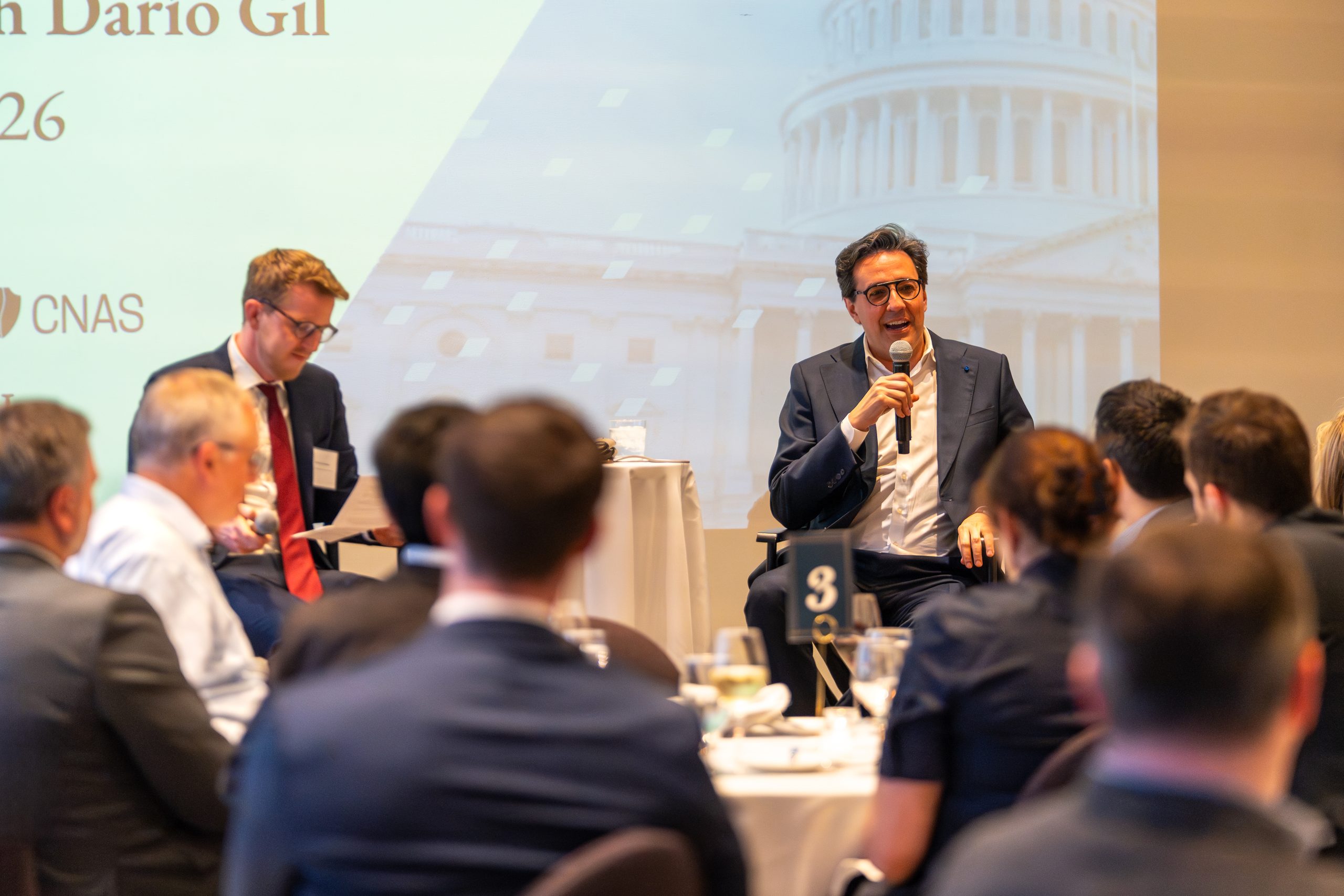
Horizon co-leads the AI for Science Fellowship, which places AI experts at national labs to contribute to Genesis Mission initiatives. We are also a member of the Accelerate Science Now coalition, which supports AI-powered innovation through shared data platforms, public-private partnerships, and investment in compute and energy, and of the Big if True Science Accelerator, which trains scientists and technologists to become ARPA program managers.
Examples of relevant public work by fellows and alumni:
- Willy Chertman (IFP) organized a workshop on the case for clinical trial abundance to prevent AI-enabled drug discovery from getting bottlenecked by slow trials.
- Daniel King (FAI) wrote a state playbook for letting data centers supply their own power and testified on data center siting in Wisconsin.
- Autumn Dorsey (Heritage) made the case for pro-growth reforms as data center construction slows.
- Joseph Keller (Brookings) made the case for congressional leadership on quantum information science, a frontier technology closely related to AI progress.
- Arushi Gupta (IFP) co-wrote a blueprint for federal AI R&D, including proposals for funding reforms to boost AI-for-science institutions and public databases to unlock new antibiotic discovery.
Fellows and alumni in government have taken leading roles on bipartisan efforts such as the American Science Acceleration Project and the National Quantum Initiative Reauthorization Act, and worked at science and innovation offices at agencies and offices within DARPA, the Departments of Energy, Health and Human Services, and several other agencies.
Protecting national security
After frontier AI models’ cyber capabilities rose sharply in the spring of 2026, Horizon quickly launched an AI Rapid Response Fellowship. The program places technical and policy experts in federal agencies for a year to work on urgent government AI security missions, such as defending critical infrastructure from attacks.
Examples of relevant public work by fellows and alumni:
- Krystal Jackson (CSET) analyzed in 2022 whether AI would favor cyber offense or defense, years before AI-powered intrusions made it a live policy question.
- Moritz Hanke and Jassi Pannu (CHS) co-authored a Science paper on sensitive pathogen data governance as AI tools for biology improve.
- Nikhil Mulani, after doing his fellowship at DHS’s cyber security agency, launched an organization focused on mapping the economics and security of the AI supply chain.
- Michelle Duncan (CNAS) co-authored an analysis showing that China is sidestepping chip export controls by pushing older lithography tools to near-frontier output, and briefed congressional staff on the subject.
- Di Cooke (CSIS) examined the security implications of realistic synthetic media in “Crossing the Deepfake Rubicon.”
Within government, fellows have supported a wide range of agencies and offices with national security remits, for example covering AI adoption and R&D funding inside the Department of War, cyber security for critical infrastructure at the Department of Homeland Security, supply chain analysis at the Department of Commerce, and diplomatic negotiations at the Department of State.
Supporting economic and human flourishing

Many of our fellows and alumni have worked to understand and address AI’s economic impacts. For example, on Capitol Hill, they have supported bipartisan efforts such as the AI Public Awareness and Education Campaign Act, which would expand access to AI education; the AI Workforce PREPARE Act, which would improve federal data on how AI affects jobs; and the Senior Chatbot Protection Act, which focuses on older Americans’ use of AI.
More examples of relevant public work by fellows and alumni:
- Teddy Tawil (Carnegie) mapped three competing views of AI’s effect on jobs, and policy measures worth pursuing no matter which view proves correct.
- Matt Burtell (AFPI) argued that American workers are winning the AI era, and set out a child-safety framework built on parental authority.
- Adefoluke Shemsu (SeedAI) contributed to the AI Opportunity Inventory, a collection of AI use cases that have the potential to meaningfully contribute to major societal goals.
- Michael Yang (CDT) studied New York City’s AI hiring law, an early test of regulating AI in employment; the use of technology by public housing agencies; and the risks associated with personalized learning technologies.
- Autumn Dorsey (Heritage) wrote on the harm AI companion chatbots could pose to children.
- Jack Titus (FAS) set out recommendations for AI policy in health, education, and labor.
Modernizing government

Horizon as an organization has supported government modernization in various ways, including by co-running the government’s first-ever AI hiring fair in 2024 as part of the TechToGov coalition and by outlining options for federal hiring reform.
Examples of relevant public work by fellows and alumni:
- Ashley Nagel (Sen. Schatz) focused on congressional modernization and AI adoption during her Senate fellowship and now works as Senior Manager for Government Innovation at the POPVOX Foundation, which helps Congress keep pace with technology through staff trainings, tool development, and other AI-related initiatives.
- Zac Castaneda and Ryan Quandt (Texas Legislature) developed AI workflows to more efficiently oversee government spending and analyze legislative proposals.
- Michael Yang (CDT) dispelled common myths about using AI to deliver government services.
- Joel Burke (Sen. Rounds) wrote the book Rebooting a Nation on how Estonia digitized nearly all of its government services and put AI to work delivering them, with lessons for the US government—a project he started after seeing from the inside how little digital capacity Congress had.
Our fellows in government, while generally focused on broader policy questions, have also often become in-house experts for their offices on AI tools and their strengths and weaknesses, helping offices adopt AI faster and better than they otherwise might have.
Part III. What the future holds
Today, AI’s benefits and risks are no longer hypothetical, and the public is paying far more attention. Yet the gap between the technology and government capacity has only grown. This makes our mission all the more important: there has never been a more critical time to make sure our governing institutions have access to staff with deep AI policy expertise.
The field of AI policy has also changed, with more people looking to break in, more demand for talent across the AI policy ecosystem, more organizations involved, and more windows for government to launch ambitious capacity-building initiatives. With these shifts in the landscape in mind, we plan to both scale the work we’ve already been doing and expand into new areas.
Scaling pipelines into AI policy
There are two ways to build a broad field of AI policy talent. One is helping AI experts transition into policy, which is the primary approach we took in our first years. The other is helping policy leaders transition into AI. As AI has become mainstream, we have started doing more work in this area. We plan to expand our work on both of these fronts.
Helping AI experts transition into policy work
Our core work in the last few years has been helping AI talent get into policy. We’ve supported hundreds of people making the transition into public service work through our Fellowship, Career Accelerator, in-person workshops and other events, and extensive one-on-one support for experts looking to transition in and hiring managers looking for talent. In our first year, our programs received a couple hundred applications, compared to thousands now. And whereas we previously had to proactively pitch offices on hosting AI talent, we now get many more requests than we can answer. We’re scaling our programs to keep pace with this exponential increase in both the supply of and demand for talent.
Doubling down on AI as our core focus area. Due to the urgency and scale of demand for AI policy talent, AI will increasingly be the focus of our work. AI has always been our primary area, but over the past few years, we’ve also supported fellows in other domains, including biotechnology and biosecurity (we launched amid a pandemic), space, and energy. These remain critical areas, and where they overlap with AI (e.g. at the AI-bio intersection) and where we see good opportunities to contribute, we will keep working on them. We will also remain focused largely on the federal level, though we’re open to working with other levels of government when asked, as in our pilot program in Texas.
Helping policy leaders get into AI work
Four years ago, AI was sufficiently niche that very few policy and government leaders wanted to specialize in it, let alone make a full-time career shift into the field. That has changed.
A year ago, we began to expand our work to serve policy and government leaders who are deepening their AI focus.5 In addition to providing one-on-one support, we’ve so far launched two dedicated programs:
- The AI Policy Leadership Network, which exposes policy leaders to the people, places, and ideas at the forefront of AI. The first cohort brought together a bipartisan group of around 40 leaders for a learning trip to San Francisco and dinner discussions with cabinet secretaries, senators, and world-leading experts. We will soon open applications for the next cohort.
- Our AI Rapid Response Fellowship, which adds short-term capacity to agencies dealing with emerging crises. Unlike our regular fellowship, this program is tailored to people with extensive policy and government experience. At the time of writing, we’re finalizing the first cohort.
This is one of our biggest growth areas as an organization, and we expect to do a lot more here in the coming years.
Building out public educational resources
We also publish a large and growing body of educational content on AI policy work. These resources draw on the tailored training and advising resources that we’ve developed in our other programs, such as the fellowship, and make as much of that material openly available as possible.
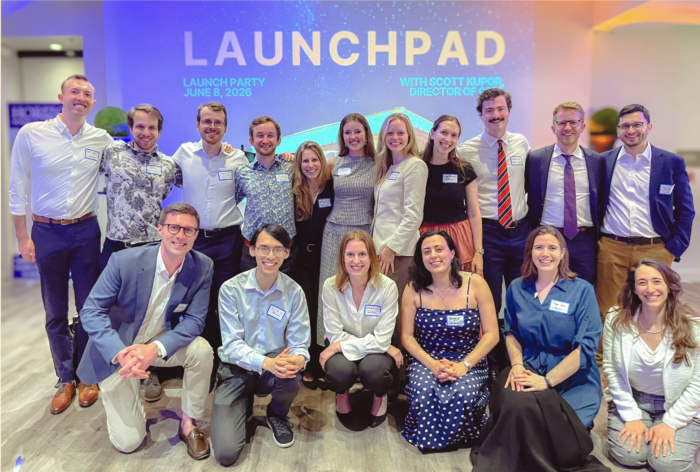
Our two core projects are emergingtechpolicy.org, which houses guides on AI policy careers and has reached more than 250,000 users, and our Substack newsletter Launchpad, which hosts timely updates, expert interviews, and personal stories. Some of our most-shared resources include:
- Q&As with policy leaders and AI experts, including Scott Kupor, Jen Pahlka, Helen Toner, Neil Chilson, Sayash Kapoor, and many others, on where they think AI policy talent can make a difference and how to get into the field.
- Deeply researched overviews of the key AI players in government, including an extensive overview of relevant federal agencies, guides to who’s doing what on AI in Congress, and a guide to state government.
- Databases of opportunities to break in, such as fellowship programs, and advice on how to succeed in applications to AI policy jobs.
We have far more demand for support than we can meet, and open-sourcing our work allows us to serve as many people as possible without compromising the high-touch quality of our more selective programs. We’re excited to expand this work, both by growing the existing resources to keep pace with changes in the field and by adding new content and formats.
Government AI capacity is a policy choice
Outside organizations like Horizon play an important role in building government AI capacity. Programs like our fellowship have already made a big difference.6 But ultimately, government itself should be in the lead. We often say that part of our job is to put ourselves out of business. As AI continues to grow in prominence, the door is now open to ambitious government AI talent and capacity efforts. A key way to serve Horizon’s mission is to help make those happen.
Some essential talent work will always exist outside government. For instance, government itself will likely never prioritize helping people explore their various policy career options (where working in government is only one option among many). Another example is training. No single hiring manager, whether in or outside government, has much incentive to train someone who is new to the field. The market for talent is inefficient in many ways, and nonprofits exist to solve exactly these kinds of public goods problems.
But government itself will have to tackle many of the barriers to recruiting, retaining, and utilizing AI talent that we described in Part I. This includes raising pay, speeding up hiring and administrative processes, and giving people better resources and support once they’re on the job. It also includes AI training and tool access for the existing government workforce.
This need has not gone unrecognized, and some progress has been made. The Obama administration in 2016 and the first Trump administration in 2019 both called for AI training for the federal workforce. Talent programs with an AI focus, like the Biden administration’s AI Corps and the Trump administration’s Tech Force, create dedicated onboarding pathways. Broader government workforce reforms, such as cross-agency talent pooling and skills-based hiring, also matter a great deal for AI capacity. And new ideas are still being tried: the White House announced the launch of an AI National Security Strategic Reserve of non-governmental talent in June, and Congress is working on bipartisan government AI talent legislation.
But these efforts, while important, have not been enough. And despite the stakes, there are very few outside organizations supporting this work. In the coming years, we aim to help fill this gap—including by promoting and improving AI talent programs that already exist, sharing lessons learned with government partners on how to design and execute new AI talent initiatives, and supporting policy reforms that boost AI hiring and training in the permanent government workforce.
AI will continue to create huge opportunities and challenges for the US government. Meeting this moment will require far more AI capacity in government than it currently has, a central pillar of which is talent. Building that capacity is a policy choice—a choice we must make.
If you want to get involved or support our work, you can:
Fund our work; learn more and get in touch here
Stay up to date on our work by signing up for updates and our Substack newsletter Launchpad
Register interest in AI policy opportunities through our career interest form
Apply to work at Horizon; our jobs page lists open roles and a form where you can express interest even if we have no current openings
- There’s been a lot of debate within the public interest technology field about the potential of AI and how much (if at all) it should change what the field focuses on. Fundamentally, AI is a tool, and the question is how much that tool can solve the problems that matter most. Some are bullish on AI’s potential to transform government operations and services. Others are skeptical, thinking the technology is overhyped. And still others argue that to unlock AI’s potential, we need to focus mainly on institutional reform rather than AI itself.
↩︎ - Jen Pahlka, for example, breaks down the capacity agenda into four interdependent steps: (1) talent—getting the right people into the right roles, (2) process—right-sizing government process and procedure, (3) technology—building or acquiring the right kind of capacity, and (4) incentives—making sure agencies and others are rewarded for outcomes, not compliance.
↩︎ - Of our 117 fellows, 72 have thus far completed the program (either finishing their one-year or two-year terms or leaving early because of accelerated job offers). Of these alumni, about 38% went directly into government after their fellowship, 47% into civil society (e.g. think tanks and policy nonprofits), and 6% into policy-focused graduate study (often still doing applied work on the side). The remaining 9% took private sector roles outside policy, mostly in consulting, defense technology, and startups. Figures as of October 2026.
↩︎ - We built on the success of several other organizations. Programs like the AAAS Science and Technology Policy Fellowship, TechCongress, and the Aspen Policy Academy have long helped technologists transition into policy work, and we’re grateful to have partnered with them. Our focus on policy is also not a claim that policy work can be cleanly separated from implementation—policy design that ignores how government will carry it out usually fails. This is one reason we want people with technical and operational experience in policy roles who can understand how a given technology-related rule, program, or purchase would actually work in practice.
↩︎ - Critical training and education work in this area is also being done by programs like Meridian’s Tech Labs (formerly at the Wilson Center), which runs AI seminars for congressional and executive branch staff; the Partnership for Public Service’s AI Center for Government, which trains senior federal, state, and local leaders to set AI strategy for their agencies; and Stanford HAI’s Congressional Bootcamp, which brings House and Senate staff to campus each summer to learn about AI, among many others.
↩︎ - People debate whether programs like fellowships actually catalyze sustained change, or are instead an obstacle to broader reform. Jen Pahlka, in her version of the “Three Horizons” framework, describes some government capacity interventions as “transforming” (“H2+”) interventions that catalyze sustained change, whereas others are “sustaining” (“H2-”) interventions that relieve just enough pressure on the status quo to perpetuate it. In theory, fellowships could be either. Some worry that an office with a fellow will be “one less voice demanding permanent, in-house technical capacity for the institution.” In our experience, this isn’t generally how it works. Instead, fellows are often a necessary catalyst for building more in-house capacity: we’ll talk to an office that tells us they want capacity to work on AI, but none of their existing staff know the issues and they are too busy to learn. A fellow helps them get up to speed and opens the door to further hiring, often with the fellow converting into a permanent in-house employee. We think this “transforming” effect is bigger than the “sustaining” effect of reducing demand for in-house capacity.
↩︎